



 Polski
 English
 Italiano
 Español
 Čeština
 Српски
 Deutsch
 Ελληνικά
 Slovenský




-
€
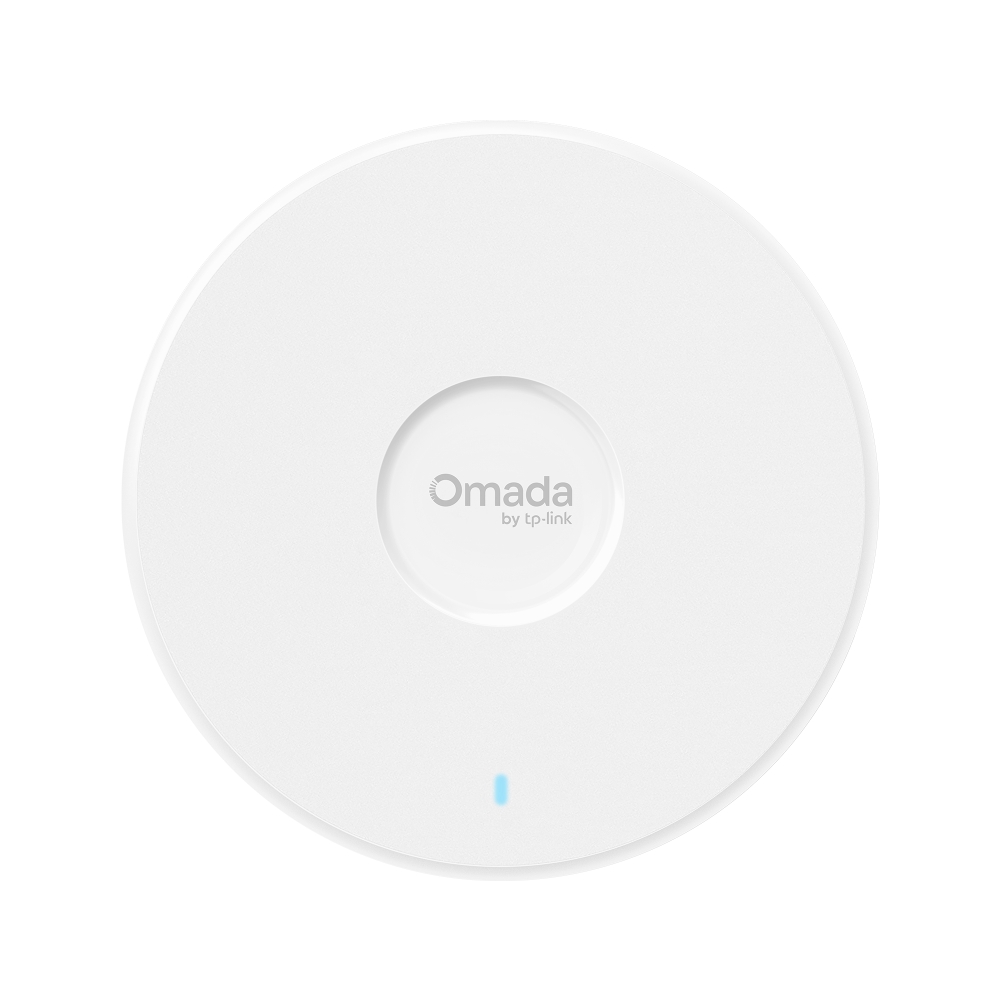
TP-Link EAP770 Omada Access Point Wi-Fi 7 BE9300
Price
165,39 €
203,43 € incl. tax
favoriteAdd to wishlist
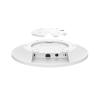
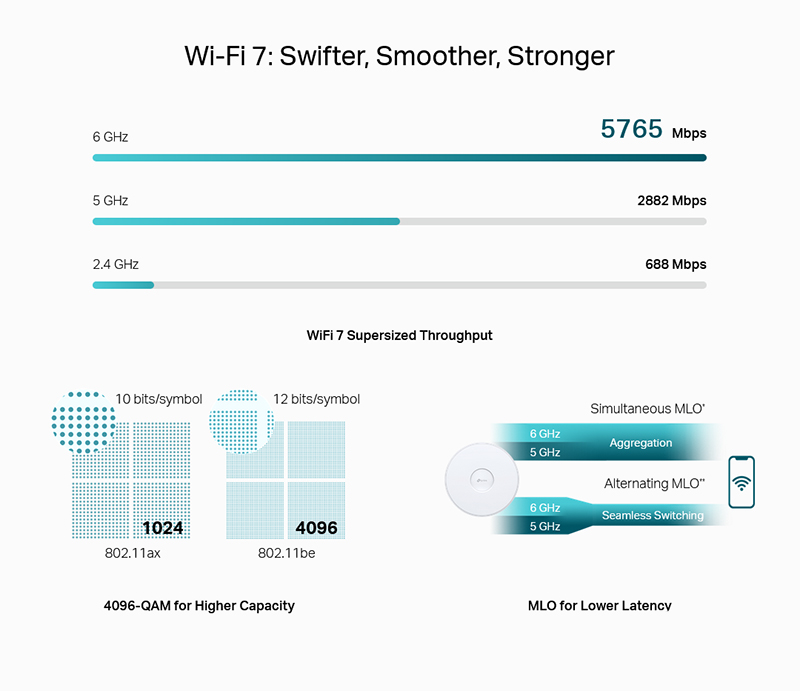
The TP-Link EAP770 is an access point designed to operate within the Omada system. It can transmit a Wi-Fi 7 wireless network, utilizing the IEEE 802.11 b/g/n/ax protocols in the 2.4 GHz band, IEEE 802.11 a/n/ac/ax/be in the 5 GHz band, and IEEE 802.11 ax/be in the 6 GHz band. The maximum theoretical throughput is 688 Mbps in 2.4 GHz, 2882 Mbps in 5 GHz, and 5765 Mbps in 6 GHz, respectively. It delivers significantly faster connection speeds than Wi-Fi 6 / Wi-Fi 6E solutions, thanks to the deployment of the new 802.11be protocol and 4096-QAM modulation. Wi-Fi 7 also introduces many other useful features, the most important of which is MLO (Multi-Link Operation), allowing connections to be established across multiple bands simultaneously, rather than just one as before. The device comes equipped with a 2.5G Ethernet port, which serves as the PoE+ (802.3at) power input. Alternatively, power can be supplied via a DC jack. The housing is designed for wall or ceiling mounting, with the ceiling being the default installation choice.
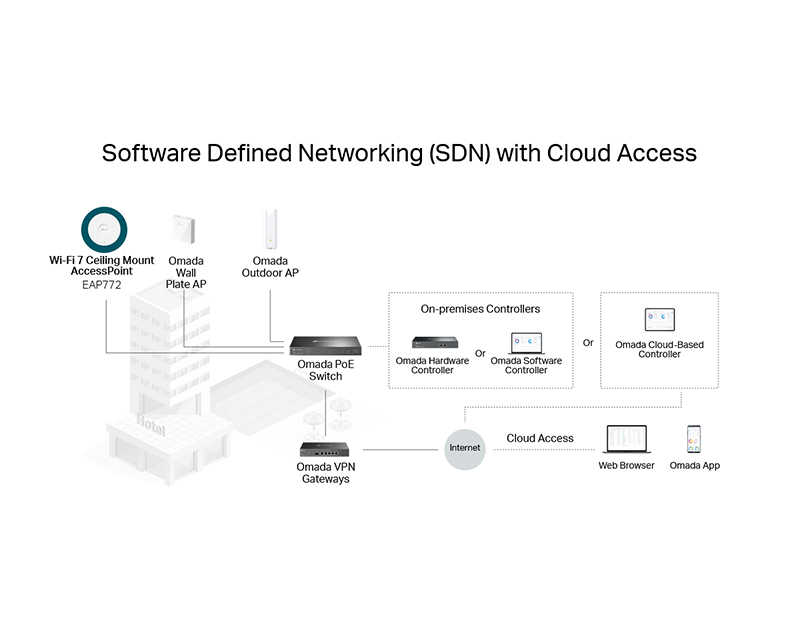
The device is designed to operate within the Omada ecosystem. The system allows for centralized management of multiple access points to create a unified, wide-area wireless network. As you move between individual devices, you will be switched automatically without losing your Wi-Fi connection. Omada provides many advanced features related to network configuration and maintenance. It is a solution dedicated to professional applications in offices, restaurants, schools, universities, and supermarkets.
Wi-Fi 7 BE9300
The access point is designed to transmit a Wi-Fi 7 wireless network, utilizing the IEEE 802.11 b/g/n/ax protocols in the 2.4 GHz band, IEEE 802.11 a/n/ac/ax/be in the 5 GHz band, and IEEE 802.11 ax/be in the 6 GHz band. The maximum theoretical throughput is 574 Mbps in 2.4 GHz, 2880 Mbps in 5 GHz, and 5760 Mbps in 6 GHz, respectively. Such high speeds are achievable thanks to the implementation of the 802.11be protocol, which introduces 4096-QAM modulation, whereas older protocols (802.11ax) utilized a maximum of 1024-QAM modulation.
The Wi-Fi 7 network also introduces other features that positively impact wireless connection quality. The most important of these is MLO (Multi-Link Operation), which allows data to be transmitted across more than one band simultaneously (e.g., 2.4 GHz and 5 GHz). In older standards, a given device could only connect to an access point using a single band at a time.
Omada System
The device is designed to operate within the Omada ecosystem. The system allows for centralized management of multiple access points to create a unified, wide-area wireless network. As you move between individual devices, you will be switched automatically without losing your Wi-Fi connection. Omada provides many advanced features related to network configuration and maintenance. It is a solution dedicated to professional applications in offices, restaurants, schools, universities, and supermarkets.
2.5G Ethernet port,
PoE power supply
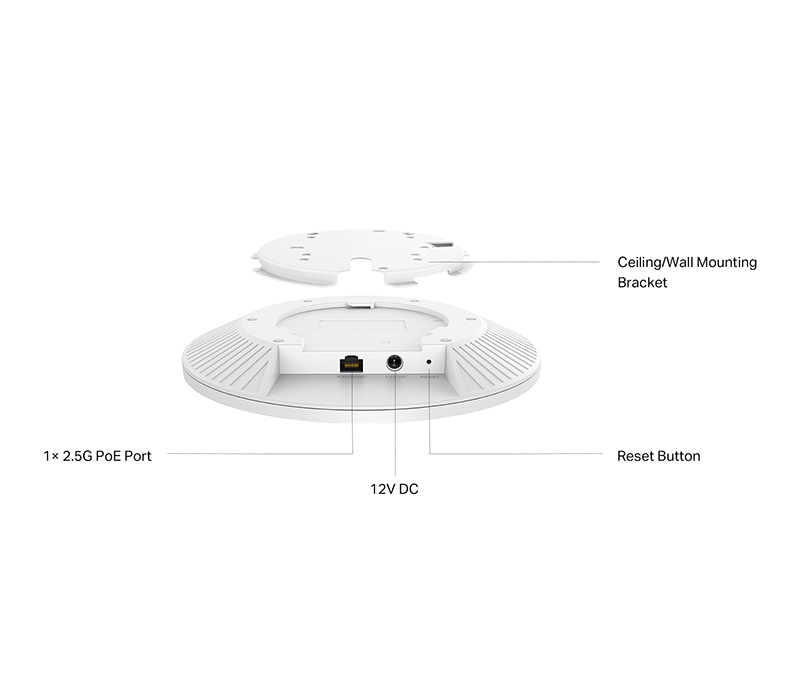
The access point features a 2.5G Ethernet port, which enables full utilization of the capabilities offered by the Wi-Fi 7 standard. It allows for a significantly faster wired connection compared to standard solutions equipped with 1G Ethernet ports. At the same time, the port serves as a PoE+ (802.3at) power input; alternatively, you can also use a standard 12V DC jack.
Specification
| TP-Link EAP770 | |
| Hardware | |
|---|---|
| Ports | 1 port Ethernet 2.5G |
| Buttons | Reset |
| Power supply | 802.3at PoE or 12V/2,5A DC |
| Power Consumption | 24,05 W (PoE power supply) 20,92 W (DC power supply) |
| Dimensions(W x D x H) | 220 × 220 × 32,5 mm (8,7 × 8,7 × 1,3 cali) |
| Antenna Type | 2,4 GHz: 2× 4,0 dBi 5 GHz: 2× 5,0 dBi 6 GHz: 2× 5,0 dBi |
| Bluetooth | 1× 4,0 dBi, Bluetooth 5.2 *Software update may be required |
| Installation | Ceiling, wall, or junction box mounting |
| Wireless specifications | |
| Wi-Fi Coverage | 140m2 |
|
Wi-Fi Client Capacity |
380+ |
| Wireless Standards | IEEE 802.11 a/b/g/n/ac/ax/be |
| Wireless Frequency | 6 GHz, 5 GHz and 2,4 GHz |
| Maximum theoretical throughput |
2,4 GHz: 688 Mb/s 5 GHz: 2882 Mb/s 6 GHz: 5765 Mb/s |
| Wireless Functions |
• MLO |
| Wireless Security | • Portal Authentication • Access Control • Max MAC Filtering Capacity MAC: 4,000 • Wireless Client Isolation • VLAN • Rogue AP Detection • WPA-Personal/Enterprise, WPA2-Personal/Enterprise, WPA3-Personal/Enterprise |
| Transmit Power | < 20 dBm (2,4 GHz, EIRP) < 23 dBm (5 GHz, band 1 and band 2, EIRP) < 28 dBm (5 GHz, band 3, EIRP) < 23dBm (6 GHz, EIRP) |
| Management | |
| Omada Aplication | Yes |
| Centralized management | • Omada Cloud-Based Controller • Omada Hardware Controller • Omada Software Controller |
| Cloud access | Yes. Requires the use of an Omada Controller. |
| Email notifications | Yes |
| LED Control | Yes |
| MAC access control | Yes |
| SNMP | v1, v2c, v3 |
| System log | Yes |
| Web-based management | Yes |
| Other features | |
|
Package contents |
• EAP770 • Installation Guide • Ceiling/Wall/Junction Box Mounting Kit • Power Adapter |
| Operating temperature | 0℃–40℃ (32℉–104℉) |
| Storage temperature | -40℃–70℃ (-40℉–158℉) |
| Operating humidity | 10%–90% non-condensing |
| Storage humidity | 5%–90%, non-condensing |
| Certifications | CE, FCC, RoHS, IC |
Other products in the same category that you may find interesting: