



 Polski
 English
 Italiano
 Español
 Čeština
 Српски
 Deutsch
 Ελληνικά
 Slovenský




-
€
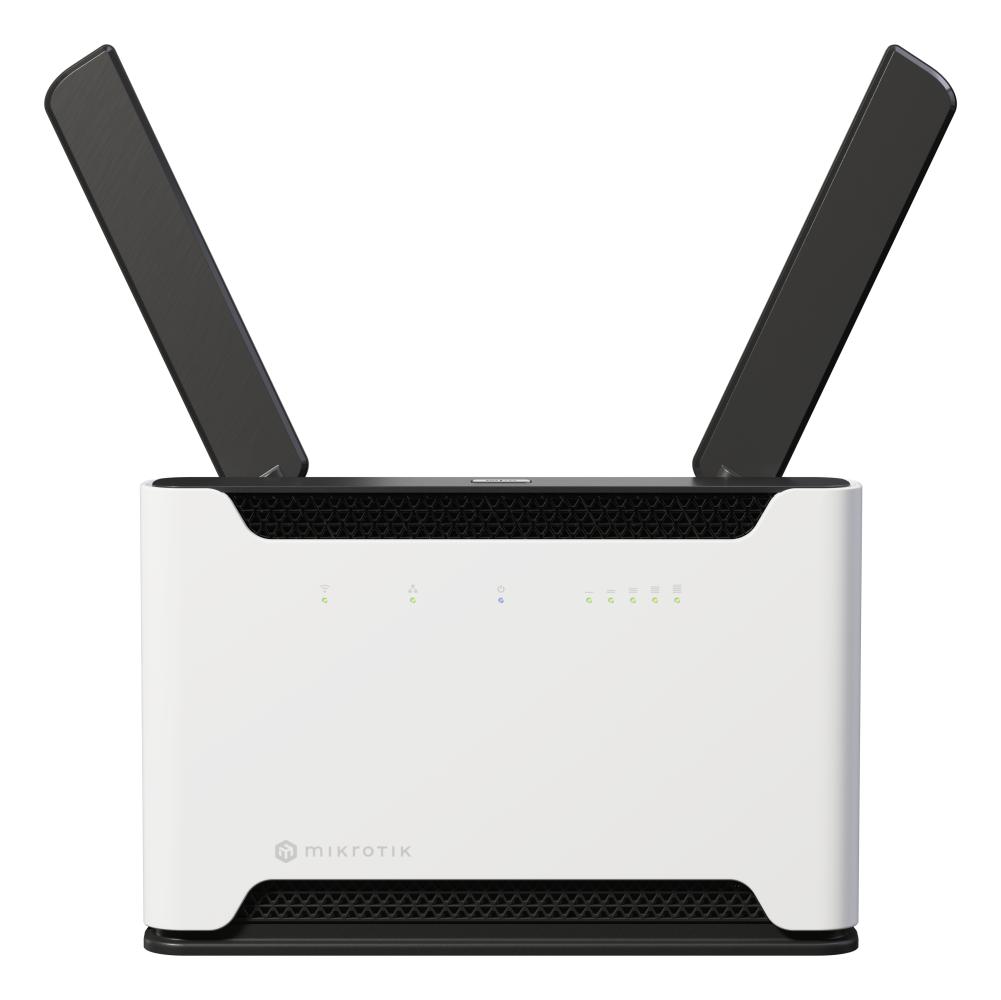
MikroTik Chateau LTE7 ax router LTE cat 7 Wi-Fi 6 AX1800, 1x 2.5GE, 4x GE
Price
114,71 €
141,09 € incl. tax
favoriteAdd to wishlist
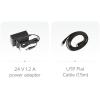
MikroTik Chateau LTE7 ax is a router equipped with an LTE Category 7 modem (R11e-LTE7). It is the direct successor to the previously sold Chateau LTE6 ax, offering better performance than its predecessor at a lower price. The maximum theoretical mobile data throughput is 300 Mb/s for downloads and 100 Mb/s for uploads, and the device is backward compatible with the 3G standard. Chateau can create a Wi-Fi 6 wireless network, supporting IEEE 802.11 b/g/n/ax protocols in the 2.4 GHz band and IEEE 802.11 a/n/ac/ax in the 5 GHz band. The maximum theoretical throughput is 574 Mb/s in 2.4 GHz and 1201 Mb/s in 5 GHz. Transmission is handled by omnidirectional antennas with gains of 3 dBi at 2.4 GHz and 6 dBi at 5 GHz. The router features 1 × 2.5G Ethernet port and 4 × 1G Ethernet ports. At its core is a powerful quad-core ARM IPQ-6010 processor clocked at 1.8 GHz. An additional advantage is the USB 2.0 port. The package includes an Ethernet patch cord and a power adapter.
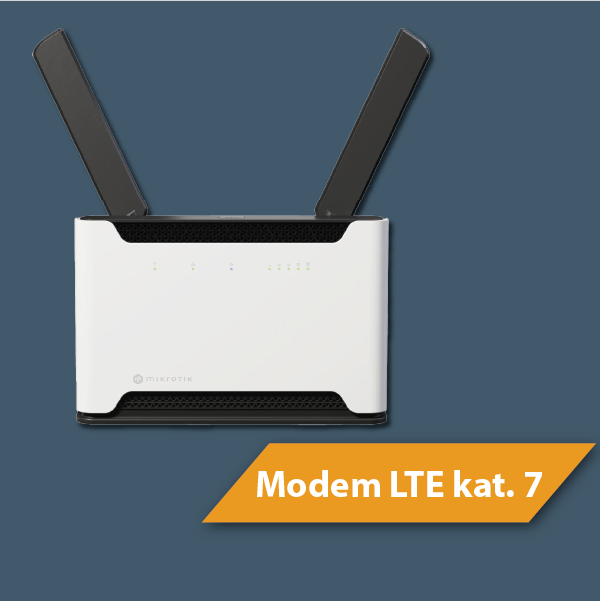
LTE Category 7 modem
The device features a built-in LTE Category 7 modem (R11e-LTE7), which is the direct successor to the previously used LTE Category 6 modems (FG621-EA). It provides additional operating bands and higher theoretical throughput—300 Mb/s for downloads and 100 Mb/s for uploads. The modem allows aggregation of two transmission bands; the full list of supported bands can be found in the specification below the product description.
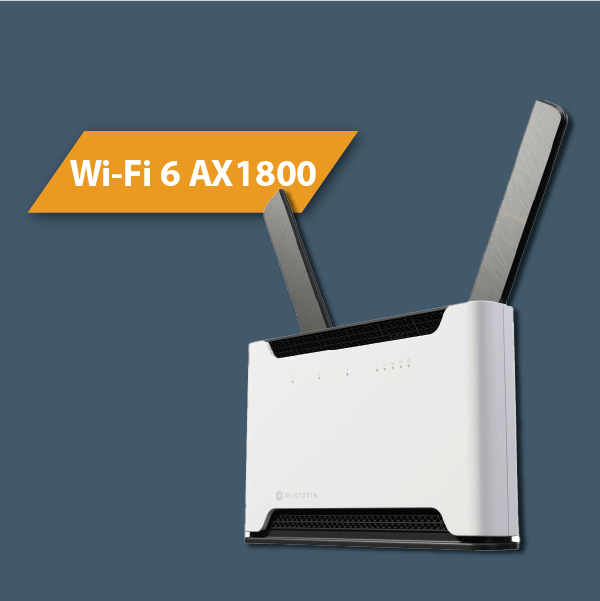
Wi-Fi 6 AX1800
The Chateau LTE7 ax can transmit a Wi-Fi 6 wireless network in both the 2.4 GHz and 5 GHz bands simultaneously. It supports IEEE 802.11 b/g/n/ax protocols at 2.4 GHz and IEEE 802.11 a/n/ac/ax at 5 GHz. The maximum theoretical throughput is 574 Mb/s at 2.4 GHz and 1201 Mb/s at 5 GHz. This speed is more than sufficient for internet use, even if you are using a traditional connection from an ISP rather than LTE. Transmission is handled by omnidirectional antennas with an antenna gain of…
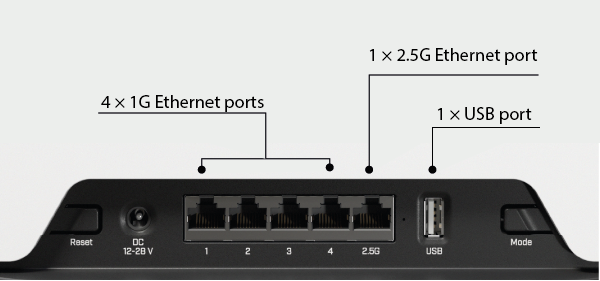
1 × 2.5G Ethernet port, 4 × 1G Ethernet ports, 1 × USB port
An important advantage of the Chateau LTE7 ax is the 2.5G Ethernet port, which allows you to create a high-performance connection within your local network, for example, to connect a NAS server. The remaining 4 ports support standard 1 Gb/s throughput. An additional benefit is the USB port, which can be used, for example, to connect external storage.
Application
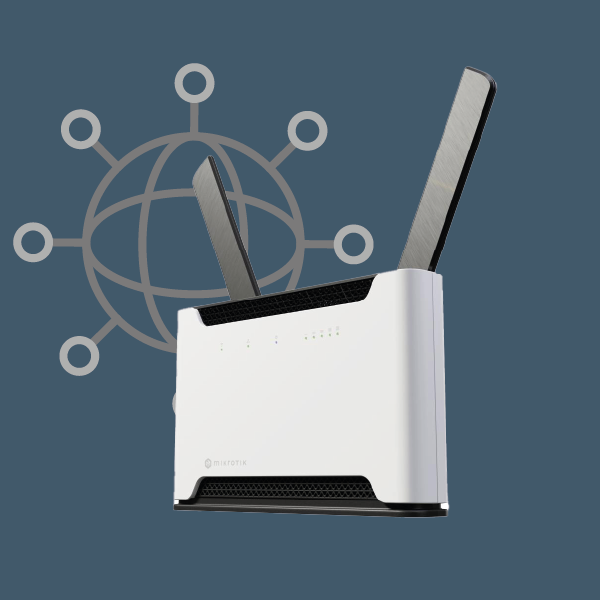
The device stands out from the competition with high performance, featuring a quad-core ARM processor clocked at 1.8 GHz and 1 GB of RAM. The RouterOS operating system provides many management features and allows the creation of advanced configurations. The Chateau LTE7 ax can be successfully used in homes and small businesses as the main router while maintaining LTE connectivity for a backup link. The device is also ideal wherever you need a router with extensive configuration capabilities but do not have access to a standard ISP and must rely on mobile data.
Specifications
| MikroTik S53UG+5HaxD2HaxD-TC&R11e-LTE7 | ||
| CPU | Quad-Core IPQ-6010 1.8 GHz | |
| CPU architecture | ARM 64bit | |
| Size of RAM | 1 GB | |
| RAM type | DDR3L | |
| Storage | 128 MB, NAND | |
| Number of 1G Ethernet ports | 4 | |
| Number of 2.5G Ethernet ports | 1 | |
| Micro SIM slots | 1 | |
| USB port | 1 (2.0 type A) | |
| Switch chip model | IPQ-6010 | |
| Wireless interface model | QCN-5022 (2.4 & 5 GHz) | |
| Wireless |
2.4 GHz: IEEE 802.11 b/g/n/ax, 2x2 MIMO (dual-chain) 5 GHz: IEEE 802.11 a/n/ac/ax, 2x2 MIMO (dual-chain) |
|
| Antenna gain |
2.4 GHz: 3 dBi 5 GHz: 6 dBi |
|
| LTE category | 7 (DL: 300 Mbps; UL: 100 Mbps) | |
| LTE modem | R11e-LTE7 | |
| TAC | 35312597 | |
| MIMO DL | 2x2 | |
| MIMO UL | 1x1 | |
| LTE FDD bands | 1 (2100MHz) / 3 (1800MHz) / 5 (850MHz) / 7 (2600MHz) / 8 (900 MHz) / 20 (800MHz) / 28 (700MHz) / 32 (1500 MHz) | |
| LTE TDD bands | 38 (2600MHz) / 40 (2300MHz) / 41 (2500MHz) | |
| 3G Category | R8 (DL: 42.2 Mbps; UL: 5.76 Mbps) | |
| 3G Bands | 1 (2100MHz) / 3 (1800MHz) / 5 (850MHz) / 8 (900MHz) | |
| Dimensions | 240 x 156 x 44 mm | |
| Operating system | RouterOS v7, License level 4 | |
| Dopuszczalna temperatura pracy | -40°C to +70°C | |
| Powering | ||
|---|---|---|
| Number of DC inputs | 1 | |
| DC jack input Voltage | 12 - 28 V DC | |
| Power adapter nominal voltage | 24 V DC | |
| Power adapter nominal current | 1.2 A | |
| Max power consumption without attachments | 15.5 W | |
| Max power consumption | 21.5 W | |
| Supported LTE bands combinatins | ||
| 2xCA |
B1+B1/3/5/7/8/20/28/32/40/41 (100MHz) B3+B1/3/5/7/8/20/28/32/40/41 (100MHz) B5+B1/3/5/7/28/40/41 (100MHz) B7+B1/3/5/8/20/28 B8+B1/3/7/20/32/40/41 (100MHz) B20+B1/3/7/32/38/40 B28+B1/3/5/7/32 B38+B38 B40+B40 B41+B41 (100MHz) |
|
| 2xCA (UL) |
B1+B1 B3+B3 B5+B5 B7+B7 B8+B8 B38+B38 B40+B40 B41+B41 |
|
| Wi-Fi specifications | ||
| 2.4 GHz | Tx (dBm) | Rx (dBm) |
| 1 Mb/s | 23 | -100 |
| 11 Mb/s | 23 | -94 |
| 6 Mb/s | 24 | -96 |
| 54 Mb/s | 21 | -80 |
| MCS0 | 24 | -96 |
| MCS7 | 20 | -75 |
| MCS9 | 19 | -70 |
| MCS11 | 17 | -67 |
| 5 GHz | Tx (dBm) | Rx (dBm) |
| 6 Mb/s | 24 | -96 |
| 54 Mb/s | 21 | -80 |
| MCS0 | 24 | -96 |
| MCS7 | 20 | -75 |
| MCS9 | 19 | -70 |
| MCS11 | 17 | -67 |
Customers who bought this product also purchased
Other products in the same category that you may find interesting: